

Why is my water heater making a knocking sound? (And when it signals a burst risk)
David Burkhead September 29, 2026

You wake up in the morning, turn on the bathroom faucet, and suddenly hear a loud, rhythmic knocking coming from your utility closet. While acoustic popping sounds can be alarming, learning how to decipher these noises will help you distinguish between routine sediment buildup, dangerous thermal pressure, and when it's financially smarter to schedule a water heater replacement.
In this guide, you'll discover the exact physical mechanics behind tank noises, master our 50% repair-versus-replace evaluation formula, and protect your North Georgia home from unexpected hot water failures.
TL;DR: Quick Summary
- Knocking and popping noises occur when water gets trapped beneath a thick layer of baked mineral sediment at the bottom of Rheem, Bradford White, or State residential water heater storage tanks, creating mini-steam explosions.
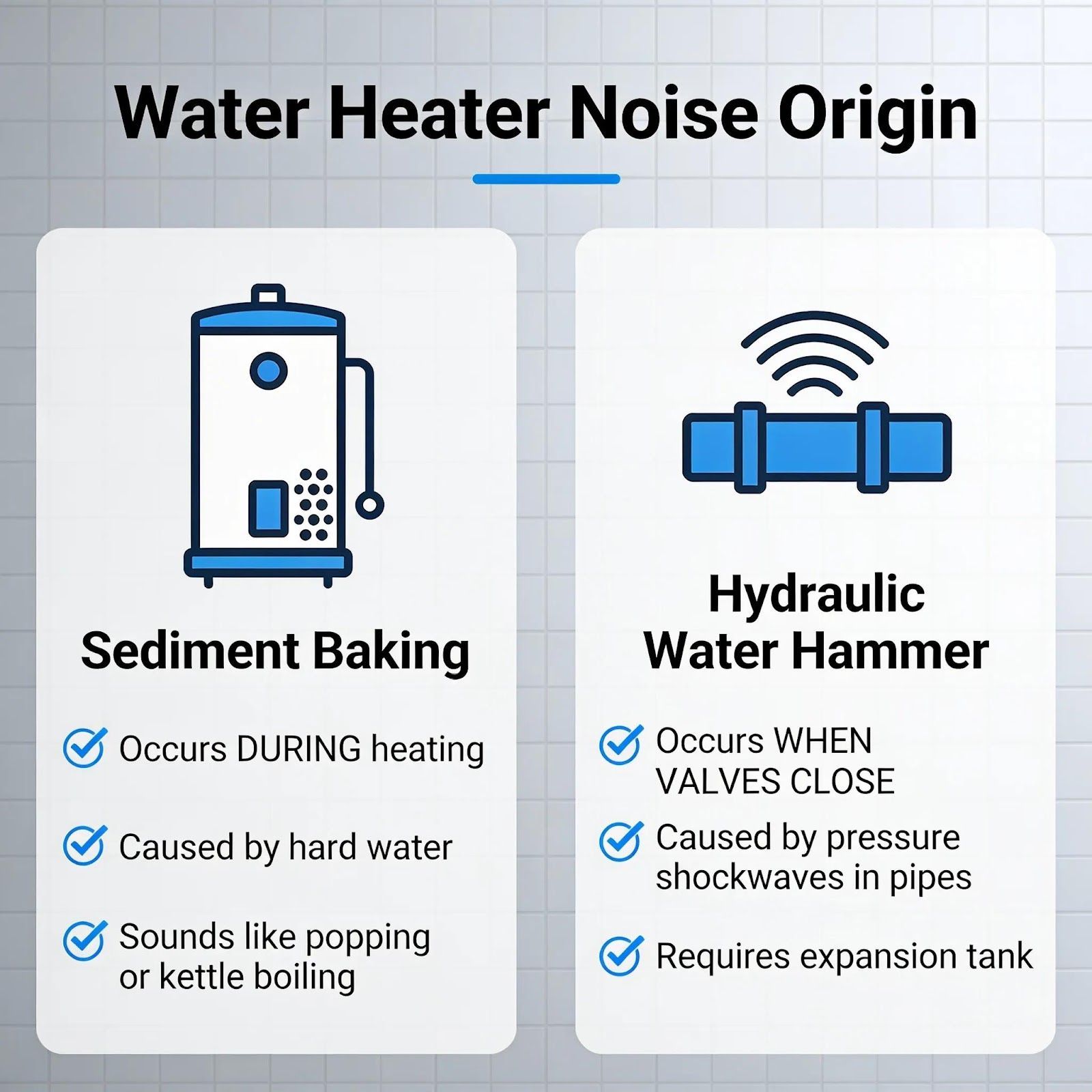
- Constant knocking when plumbing fixtures shut off is hydraulic water hammer; knocking that happens during heating cycles is sediment scale baking.
- If loud popping occurs alongside discolored hot water or base dampness, the protective porcelain glass lining inside your water heater has fractured and failure is imminent.
- Annual tank flushes prevent scale buildup, while residential water heating systems in Cumming over 8 to 10 years old with heavy scale typically require complete replacement by Lanier Plumbing & Drain.
Worried about tank noises in Cumming, GA?
Schedule a professional tank diagnosticWhat causes knocking noises in North Georgia water heaters?
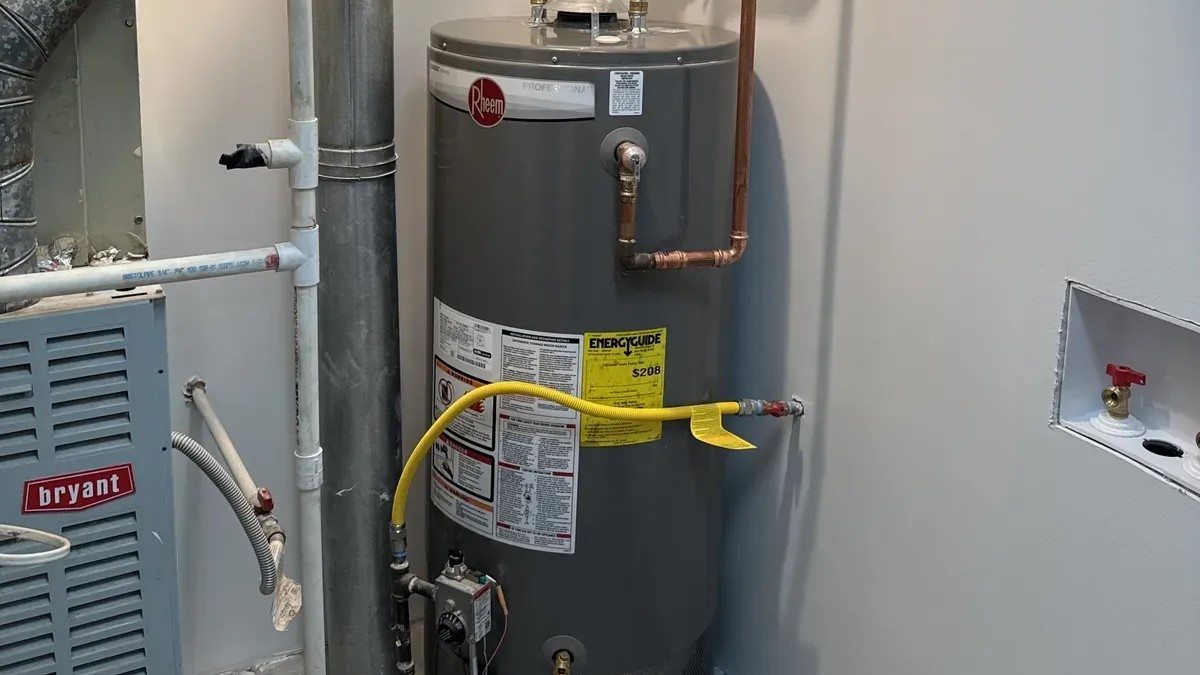
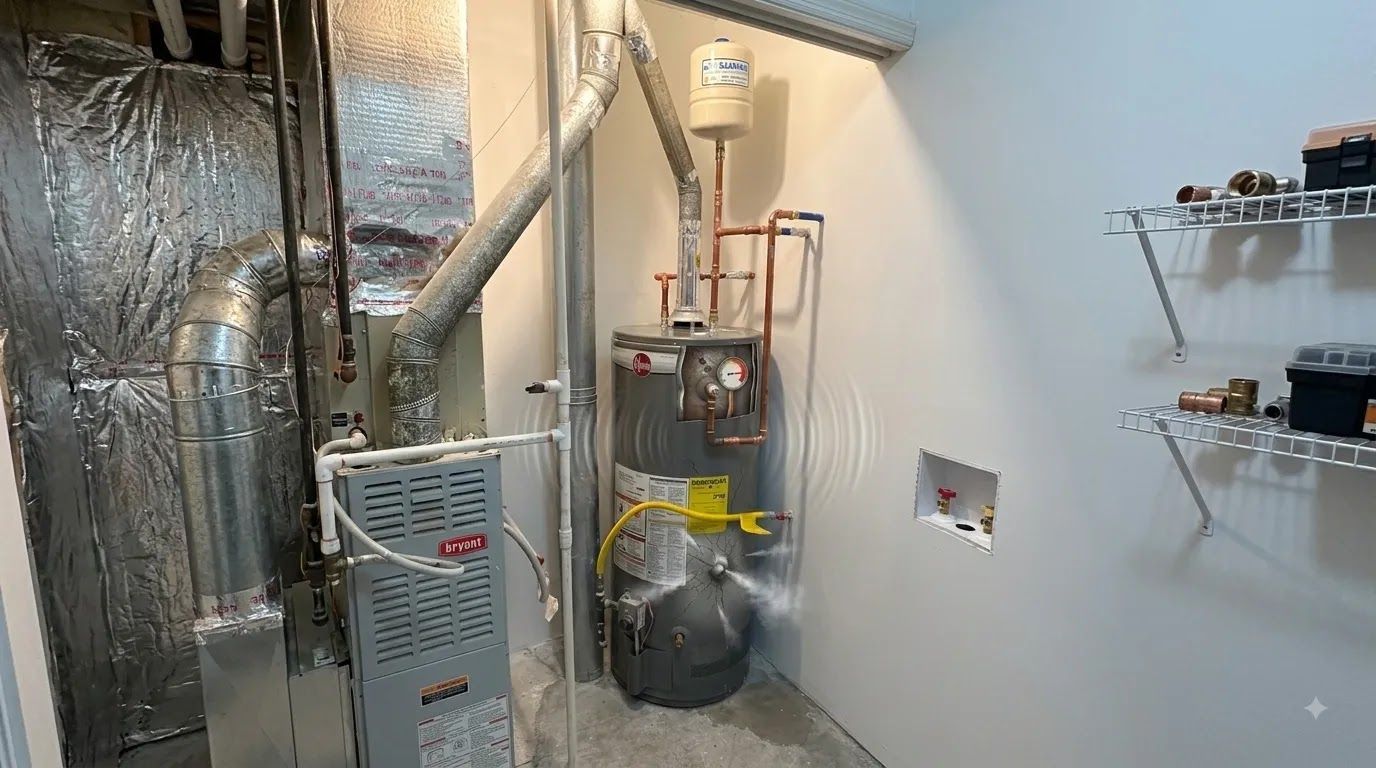
Under normal conditions, your Rheem, Bradford White, or State water heater operates almost silently. When loud knocking, popping, or rumbling echoes through your home, physical changes are actively happening inside your storage tank. In Cumming and surrounding North Georgia communities, two primary mechanical issues cause these noises: sediment calcification and hydraulic water hammer.

Lanier Plumbing's North Georgia sediment calcification protocol
The mineral content of water in Forsyth County varies depending on whether it comes from the public supply or a private well. Municipal tap water, sourced from Lake Lanier and the Chattahoochee River, is generally classified as moderately hard but lacks the extreme mineral density found in the country's most severe hard water zones. In contrast, private well water in the region is much more likely to carry elevated levels of calcium carbonate and magnesium absorbed from underground mineral deposits.
Under Lanier Plumbing's North Georgia sediment calcification protocol, every time your heating element fires up to warm incoming cold water, these minerals settle directly onto the floor of your tank.
Over time, this loose sand-like sediment bakes into a hard, dense crust directly over the gas burner plate or lower electrical heating element of your Rheem or Bradford White water heater.
- Cold water seeps underneath the hardened mineral crust at the bottom of the water heater tank.
- The lower heating element or gas burner heats this trapped water well past the boiling point inside the storage vessel.
- Steam bubbles force their way violently upward through the dense calcium carbonate layer.
- As steam bubbles escape into the cooler water above, they collapse rapidly, creating loud popping, knocking, or cracking sounds throughout your Cumming home.
Hydraulic water hammer in residential plumbing systems
If you hear a sudden, sharp thumping noise only when a washing machine, dishwasher, or bathroom faucet in your home shuts off, your plumbing system is experiencing hydraulic water hammering. This acoustic shock occurs when fast-moving water stops abruptly, sending a high-pressure shockwave backward through your copper or PEX supply lines. Installing a Watts or Amtrol thermal expansion tank at your water heater absorbs these high-pressure shocks and protects your plumbing joints from bursting.
Deciphering water heater sounds: Lanier Plumbing's sound-to-risk diagnostic matrix
Not all water heater sounds carry the same level of risk for homeowners in Cumming, GA. Licensed plumbers at Lanier Plumbing & Drain use acoustic diagnostics to pinpoint exact mechanical failures inside storage tanks before disassembling equipment. Use Lanier Plumbing's sound-to-risk diagnostic matrix below to identify what your Rheem, Navien, or Bradford White water heater is telling you about its mechanical health:
| Sound Type | Primary Mechanism | Location / Timing | Risk Level | Recommended Action |
|---|---|---|---|---|
| Loud Popping / Knocking | Trapped steam escaping mineral scale | Bottom of tank during active heating cycles | High | Flush the water heater tank immediately; inspect the lower heating element or glass liner. |
| Low Rumbling / Deep Gurgle | Heavy sediment churn & thermal barrier overheating | Entire tank during long hot water runs | Moderate to High | Professional chemical descaling or complete water heater evaluation by Lanier Plumbing & Drain. |
| High-Pitched Squealing | Water forcing through a restricted shutoff or TPR valve | Inlet/outlet valves while water is running | Moderate | Open inlet valves fully; test Temperature & Pressure Relief (TPR) valve for lime buildup. |
| Sharp Metallic Thump | Shockwaves from sudden valve closure (Water Hammer) | Supply pipes immediately after turning off taps | Moderate | Check Cash Acme Pressure Reducing Valve (PRV); install or recharge thermal expansion tank. |
| Continuous Hissing or Sizzling | Water dripping onto hot gas burner assembly | Gas burner assembly or lower electrical compartment | Critical | Turn off power/gas immediately; internal water heater tank leak detected. |
If you notice sizzling or water leaking near electrical panels on your water heater, turn off your main circuit breaker immediately and consult our licensed specialists at Lanier Plumbing & Drain for expert plumbing services in Cumming.
Firsthand field data & diagnostic evidence from Lanier Plumbing & Drain
To provide clear transparency into what happens inside a noisy water heater in Forsyth County, our licensed field technicians at Lanier Plumbing & Drain collect physical measurement data during on-site diagnostic calls in Cumming, GA.
Field measurement benchmarks from Cumming, GA service calls
- Average Mineral Accumulation: In 8- to 10-year-old unmaintained water heaters in Cumming, technicians from Lanier Plumbing & Drain routinely measure 2.5 to 4 inches of hard calcified scale resting at the tank bottom.
- Thermal Overheating Delta: Infrared FLIR temperature readings taken at the burner plate of heavily scaled water heaters in Forsyth County show temperatures rising between 450°F and 520°F—more than three times the normal heat transfer range required to heat water to 120°F.
- Anode Rod Depletion Rate: Sacrificial magnesium anode rods in Cumming homes show an average wear rate of 30% per year, leaving internal steel tank walls exposed to raw mineral corrosion within 3.5 years if not inspected by a licensed plumber.

Master plumber "if-then" troubleshooting protocols
Our licensed plumbing team at Lanier Plumbing & Drain follows Lanier Plumbing's multimeter & pressure troubleshooting protocol during residential service calls in Cumming, GA:
- IF a Fluke multimeter displays an open circuit (10 to 16 ohms) across the lower electrical heating element terminal OR sediment depth exceeds 3 inches inside the tank:
- THEN replacing the heating element alone will result in premature element burnout within 90 days. The water heater tank must be descaled completely or replaced.
- IF a static water pressure gauge at your outdoor hose bib in Cumming exceeds 80 PSI AND your water heater knocks when cold water enters the system:
- THEN your home's Cash Acme Pressure Reducing Valve (PRV) has failed, and a Watts thermal expansion tank must be installed to prevent pressure spikes from cracking the tank shell.
- IF FLIR thermal imaging reveals localized hot spots above 480°F at the bottom tank seam AND discolored water drains from the Temperature & Pressure Relief (TPR) discharge pipe:
- THEN structural micro-fracturing of the internal porcelain glass lining has occurred. Cease water heater operation immediately to prevent catastrophic tank rupture.
When does a water heater knocking signal a high burst risk?
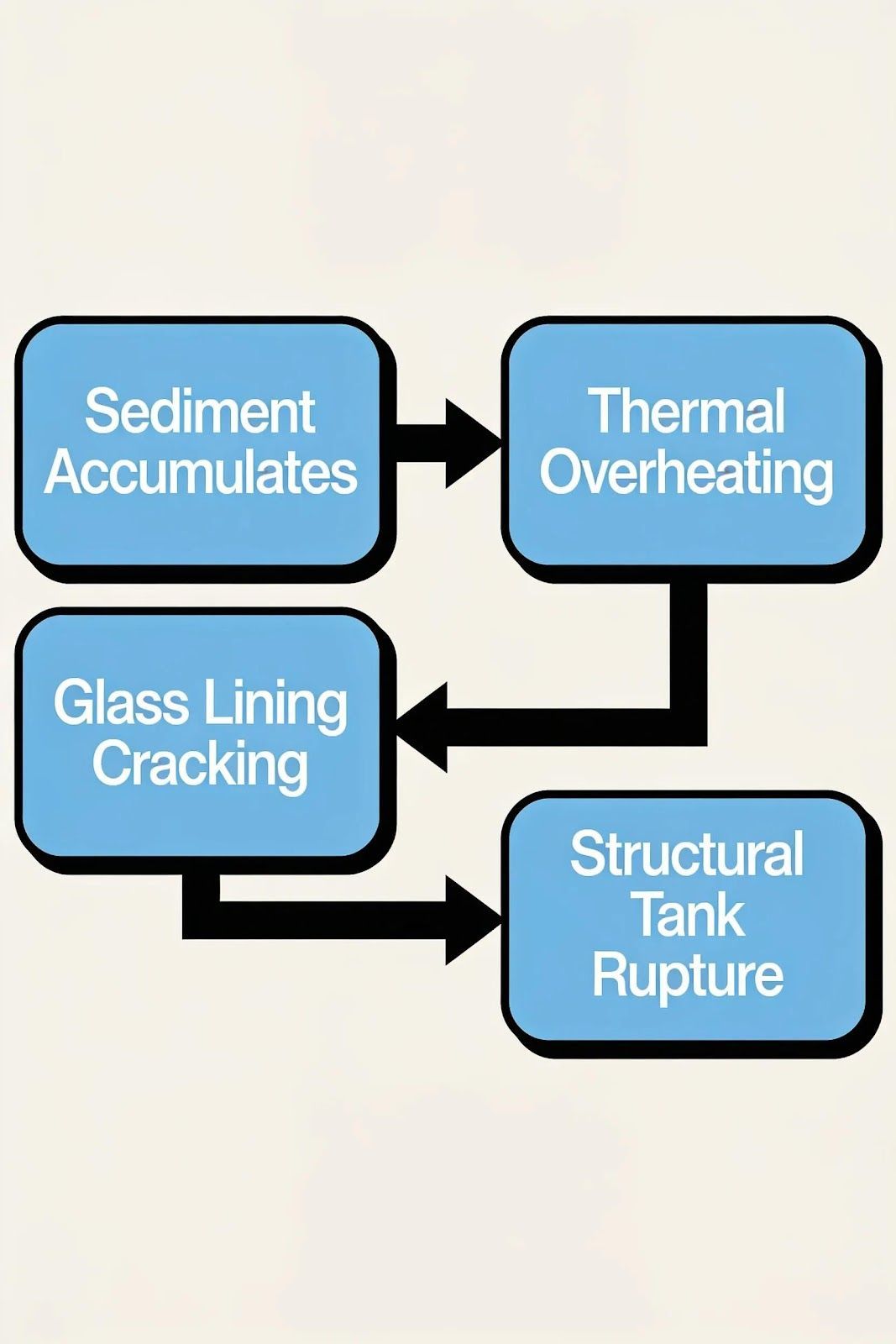
While sediment knocking starts as a maintenance issue, letting scale bake unchecked inside your Rheem or State water heater creates dangerous structural stress. Understanding how mineral buildup leads to a tank rupture lets you take fast action before water floods your home.

Lanier Plumbing's thermal fatigue & glass failure curve
According to Lanier Plumbing's thermal fatigue & glass failure curve, traditional water heater storage tanks manufactured by Rheem and Bradford White are constructed from heavy-gauge steel lined with a thin protective layer of porcelain glass. Under normal operating conditions, water cools the steel walls while absorbing heat energy. However, a thick layer of calcium carbonate scale acts as an insulating blanket. The burner below must reach extreme temperatures, often exceeding 500°F, just to heat the water above the scale layer. This intense localized heat causes the bottom steel plate of your water heater to expand excessively.
Micro-cracking of the internal porcelain glass lining
Structural steel and porcelain glass expand at completely different physical rates when exposed to extreme burner heat. As the bottom steel plate of the water heater buckles under high temperatures, the protective interior porcelain glass lining cracks and flakes off into the water supply. Once bare steel comes into direct contact with standing water in your Cumming home, rapid corrosion begins.
Sacrificial magnesium anode rod exhaustion in Forsyth County water
Every traditional water heater tank contains a sacrificial magnesium or aluminum anode rod engineered to attract corrosive mineral elements away from steel walls. In North Georgia, hard water accelerates anode consumption. Once the anode rod degrades completely (typically within 3 to 5 years in Cumming homes), corrosion attacks the exposed steel tank seams directly.
Three danger signals that warrant immediate water heater replacement
- Discolored, rusty hot water coming from your household taps confirms that the internal steel tank wall is actively rusting and flaking away into your water supply.
- Standing water or moisture pooling around the drain pan or tank legs indicates that microscopic thermal cracks have penetrated completely through the outer steel shell.
- An equipment age exceeding 8 to 10 years carries an extreme risk of sudden tank wall rupture.
Lanier Plumbing's 50% water heater financial evaluation rule
When your water heater starts knocking, you need to decide quickly: will a simple tank flush restore quiet operation, or is it time to upgrade to a new Rheem or Navien system?
Licensed plumbers at Lanier Plumbing & Drain follow a clear decision framework based on equipment age, sediment thickness, and structural tank integrity. For comprehensive options and upfront pricing, explore our dedicated water heater services.

The financial evaluation formula for water heater repairs
To avoid throwing money away on failing equipment, apply Lanier Plumbing's 50% water heater financial evaluation rule: Multiply the total estimated repair and descaling cost by the age of your water heater in years. If the calculated result exceeds 50% of the cost to install a brand-new, energy-efficient Rheem or Navien system in your Cumming home, water heater replacement is the financially sound choice.
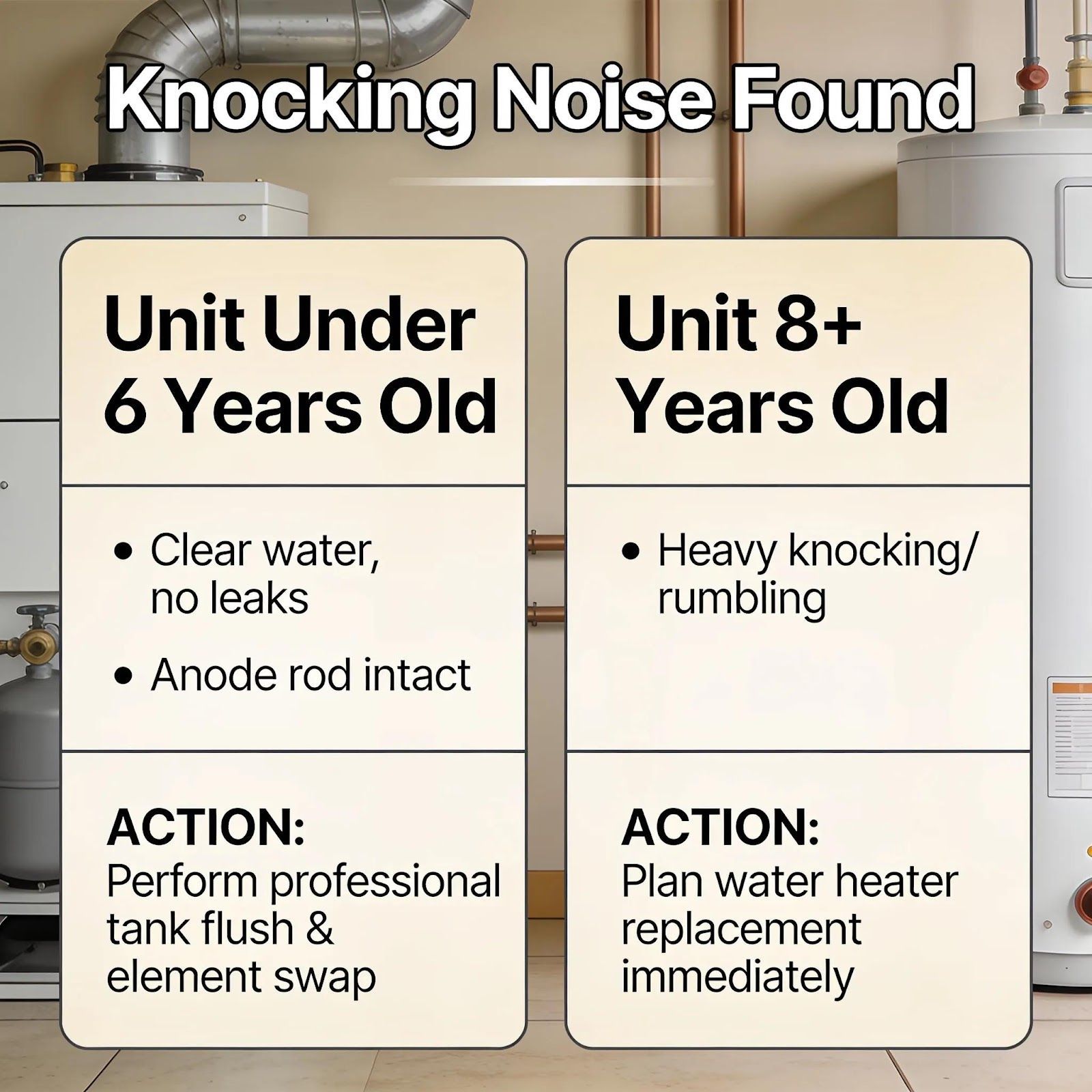
When a professional water heater tank flush works
- Your Rheem or Bradford White water heater is less than 6 years old.
- The knocking sound started recently during heating cycles.
- The hot water coming from your household faucets runs completely clear.
- There are zero signs of dampness or rust around the base of the water heater tank.
When water heater replacement is mandatory
- The water heater is over 8 years old and has never received routine tank flushes.
- Heavy mineral sediment has baked over the lower heating element, causing electrical components to burn out repeatedly.
- The brass drain valve is clogged solid with mineral scale rocks, preventing water from draining during a service flush.
- Rust spots appear on the outer tank jacket, plumbing connections, or burner assembly.
Modern replacement options, including ENERGY STAR hybrid heat pump water heaters and continuous Navien or Rinnai tankless systems, offer substantial long-term operating savings. Energy guidelines published by the U.S. Department of Energy indicate that upgrading to an ENERGY STAR certified water heater can cut household water heating energy costs up to 70%.
Lanier Plumbing's 4-step preventative tank preservation system
Preventing knocking noises and extending the operating lifespan of your water heater requires routine maintenance. Implementing Lanier Plumbing's 4-step preventative tank preservation system protects your plumbing investment against North Georgia's hard water minerals:
Step 1: Perform an annual tank drain & flush in your home
Drain 5 to 10 gallons of water from your water heater tank bottom every 12 months. Attach a heavy-duty garden hose to the brass drain valve, open the valve, and discharge the sediment-heavy water into a bucket or exterior drain until it runs completely clear.
Step 2: Inspect and replace the sacrificial magnesium anode rod
Have a licensed plumber from Lanier Plumbing & Drain inspect your sacrificial magnesium anode rod every 3 years. Replacing a worn $30 anode rod prevents thousands of dollars in premature tank corrosion damage.
Step 3: Test the temperature & pressure relief (TPR) valve
Lift the test lever on your water heater's Watts Temperature & Pressure Relief (TPR) valve annually to ensure it lifts and resets smoothly. This safety valve releases dangerous excess thermal pressure if your thermostat fails or water boils uncontrollably inside the tank.
Step 4: Install a whole-home water filtration or softening system
If your home relies on well water or high-mineral municipal water lines in Forsyth County, installing a water softener prevents calcium scales from bonding to your water heater tank walls altogether.
Conclusion: Protect your home before a water heater failure occurs
A knocking water heater is not something to leave to chance in your home. While early sediment buildup can be managed through routine flushing, persistent knocking in an older storage unit signals severe thermal fatigue and an elevated risk of tank rupture. Taking prompt action keeps your hot water flowing reliably and protects your property against catastrophic water damage.
Don't wait for a small knocking sound to turn into an emergency indoor flood. Request a transparent quote from Lanier Plumbing & Drain today. Our licensed plumbing experts deliver fast diagnostics, honest repair-versus-replace advice, and flawless water heater installations across Cumming and North Georgia.
About the author

David Burkhead is a Licensed Master Plumber (GA License #MP210488) and Operations Lead at Lanier Plumbing & Drain, located at 4360 N Industrial Dr Ste 900, Cumming, GA 30041. With over 20 years of field engineering and plumbing service experience across Forsyth County, David specializes in residential water heater replacement, tankless conversions, and commercial drain maintenance. He is committed to providing transparent, hands-on technical guidance to North Georgia homeowners.
Expert Plumbing Solutions
From leaky faucets to major installations, our certified plumbers provide reliable service you can trust.
Smart Tips for Your Home
We'll send you useful tips and special offers to help you maintain your plumbing and save money.
Contact Us
We will get back to you as soon as possible.
Please try again later.